
The Future Homes Standard came into force in England on 24 March 2026, the same day the government announced the legalisation of plug-in solar. It is a significant piece of regulation that will change what new homes look like for the foreseeable future, and it has direct consequences for anyone buying, renting or building a new property.
What the Future Homes Standard requires
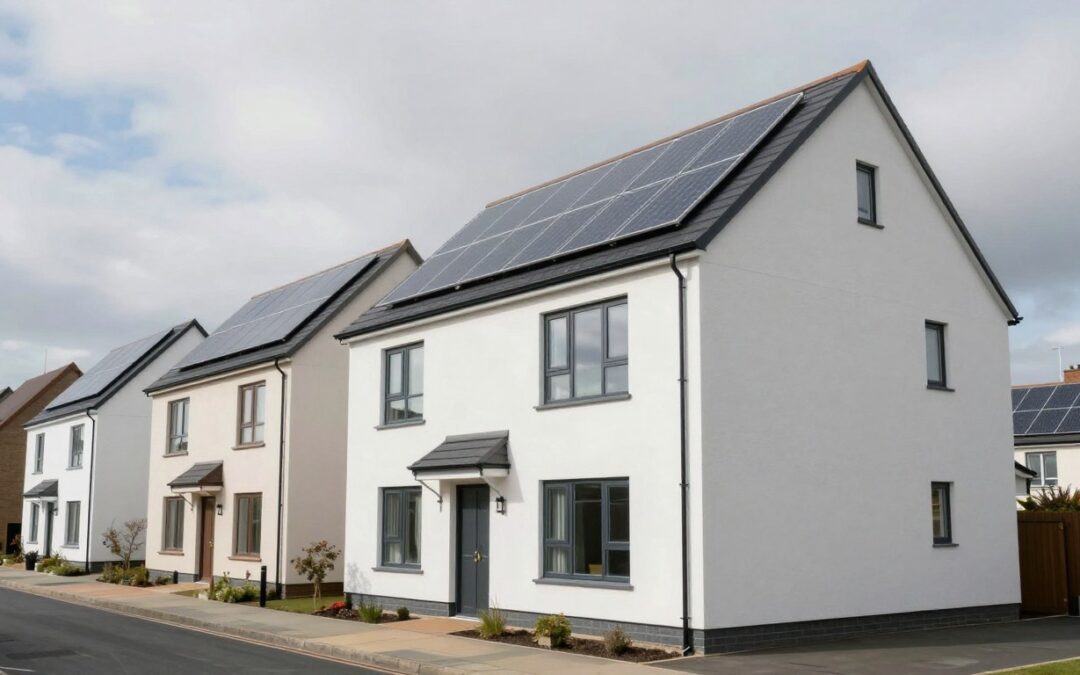
The Standard requires most new homes built in England to achieve 75 to 80 percent lower carbon emissions than those built under previous regulations. In practice, this means the end of gas boilers in new builds. New homes must be fitted with low-carbon heating, either a heat pump or a connection to a district heat network, and on-site renewable energy generation, which in most cases means rooftop solar panels.
The government estimates that homes built to the Future Homes Standard will save their occupants up to £830 per year compared to a comparable EPC Band C property.
Why plug-in solar is part of the same conversation
The Future Homes Standard covers new builds. The vast majority of the homes that will exist in 2050 have already been built. The government is well aware of this problem, which is one of the reasons plug-in solar matters so much. For the millions of households in existing properties, particularly flats where rooftop solar is not an option, plug-in systems are the primary route to domestic solar generation.
New flats built under the Future Homes Standard may not have individual rooftop solar capacity, since roof space in multi-storey buildings is shared. The regulations acknowledge this and identify plug-in solar as an alternative generation route for high-rise and flat-dwelling households.
What this means for new build buyers
If you are buying a new build home in England, you should now expect solar panels to be included as standard. Check whether the panels are covered by the developer’s warranty and whether the system is MCS-certified, which is necessary to access Smart Export Guarantee payments for surplus electricity exported to the grid.
For new build flat buyers, the position is less clear-cut. Ask the developer specifically what provision has been made for renewable generation, and whether a balcony or external space is included that would allow a plug-in solar system to be installed.
The wider picture
The Future Homes Standard is part of the government’s plan to reach 45 gigawatts of solar capacity by 2030, up from just over 22 gigawatts today. Alongside the plug-in solar rollout, an additional £100 million for the Social Housing Fund will support up to 57,000 solar installations in low-income housing this financial year. Great British Energy is also funding rooftop installations at 100 schools and colleges in 2026.
Taken together, these policies represent the most coherent push the UK has made to mainstream domestic solar generation. Whether you are in an existing home or buying new, the direction of travel is the same.