
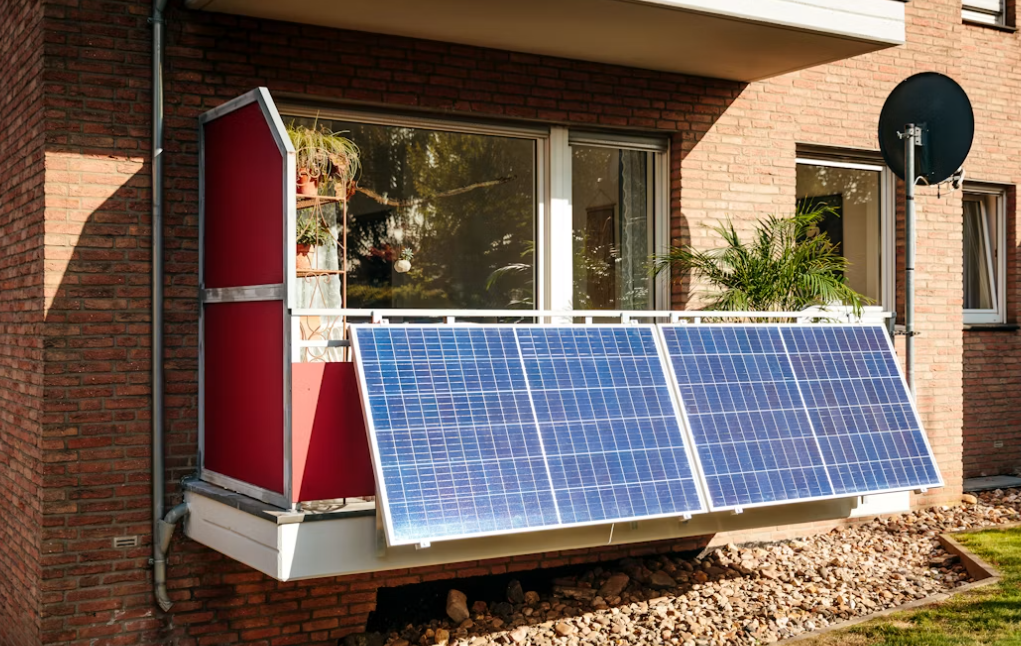
I have been building this site for just under a year, and the whole point of it was to be ready for today. The moment plug-in solar became a real, legal, properly defined product category in the UK rather than a grey area people navigated around. SI 2026/848 comes into force on 27 August 2026, and for the first time in Great Britain you can legally connect a solar panel to a standard 13A socket in your home and generate electricity from it without needing an electrician, a planning application, or a formal grid agreement.
I have had my own EcoFlow STREAM plugin set up and running since earlier this year through the hardwired route. My fence panels have been generating into the house circuits for months. Today the rules catch up with what a lot of people have already been doing, and they make it available to everyone.
This article covers what today actually means, what the law says, where to buy right now (and who to watch over the coming weeks), what you absolutely must do before connecting, and honest answers to the questions filling every forum and social media thread today. There are also links throughout to every detailed article on this site for anyone who wants to go deeper on any topic.
What changed today
Before today, connecting any electricity-generating device to a standard UK socket was prohibited by the Plugs and Sockets etc. (Safety) Regulations 1994. A solar panel plugged into a socket was not just unregulated — it was specifically prohibited. The only legal route was a hardwired installation by a CPS-registered electrician with a G98 notification to your DNO. Most people buying EcoFlow STREAM and similar products were technically in a grey area at best.
SI 2026/848 — The Plugs and Sockets etc. (Safety) Regulations 1994 and Electricity Safety, Quality and Continuity Regulations 2002 (Amendment) Regulations 2026 — amends both pieces of legislation to create a legal category called a “plug-in microgenerator.” A product certified against the government’s Interim Product Specification v2 (IPS v2) can now be legally sold and connected by the homeowner via a standard BS 1363 13A socket.
This is not a minor regulatory tweak. It is the difference between “legally speaking this was prohibited” and “this is now a defined, certified, legal product category with a clear framework.” It matters.
The changes in summary. The socket connection is now legal for certified kits. The legal output limit is 800W AC from the inverter. Panels can total up to 2,000W DC across up to four inputs. Batteries are not included in the certified category — a solar-only microinverter kit is what qualifies. The system must be a complete certified kit, not components you assembled yourself. One certified system per household under the current G98 rules. And a G98 notification to your DNO is still required — free, online, before you connect.
What does the certification actually require?
This is the part most coverage today is getting wrong. The law is in force. But a product can only be legally socket-connected if it has been certified against the IPS v2 and its inverter is listed on the ENA G98 Type Test Register. As of this morning, a small number of products — seven was the count on the ENA register from a check done last week, all from one manufacturer — are certified. The register is expected to grow quickly now the legal framework is live, but today is the legal start date, not the day every product you can find online automatically qualifies.
Before buying: check the ENA G98 Type Test Register at energynetworks.org/g98. Filter for plug-in solar and find the specific model you are considering. If it is not there, it is not certified for socket connection and you cannot legally connect it via a plug. You can still have it hardwired by a CPS electrician — but that is a different route with different costs and requirements.
Look for the compliance declaration on the packaging. Certified kits will carry a declaration that the product meets the IPS v2. If you are buying online and cannot see a compliance declaration, ask the retailer to confirm before purchasing.
For the full picture on what the IPS v2 requires and what SI 2026/848 actually says, see our detailed regulations article published earlier this month.
Where to buy plug-in solar kits in the UK today
The retail picture is moving fast today and over the coming weeks. Here is what is confirmed as of this morning.
Argos
Argos is confirmed as selling certified kits today — the first mainstream UK high street retailer to have stock on the shelves on launch day. This is significant. Argos has 800-plus stores across the UK, click-and-collect from the same day, and a returns policy most people are comfortable with. If you want to hold a box in your hands before buying, Argos is where to start. Check the Argos website or your local store for current stock and pricing. Expect the Argos listing to be under “solar panels” or “renewable energy” in the home improvement section.
Amazon UK
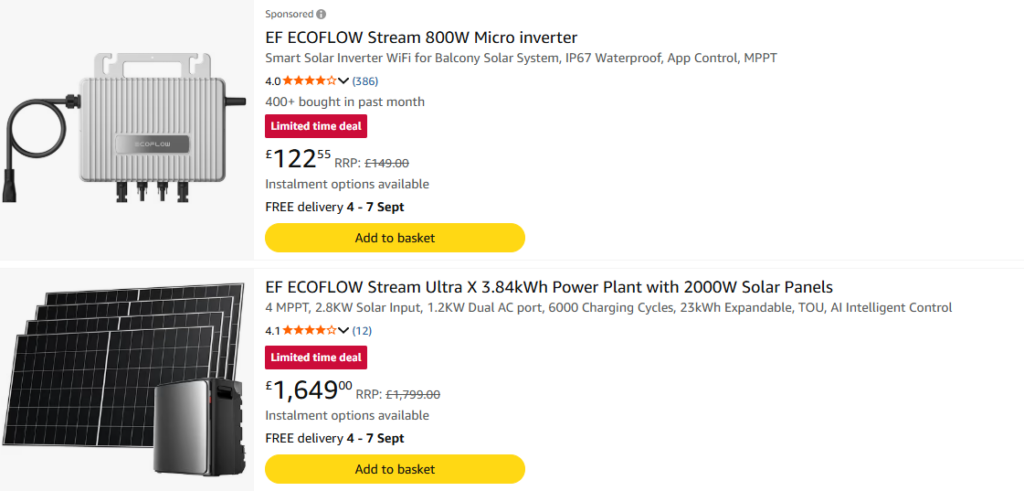
Amazon is expected to begin stocking certified kits in the coming weeks if not already. Amazon’s marketplace is also where some certified kits have been available from specialist solar retailers. The important warning: Amazon is also full of uncertified kits, imported inverters without UK G98 certification, and products marketed for garden lighting or camping that are not approved for grid connection. Filter specifically for certified IPS v2 compliant kits and check the ENA register before purchasing anything via Amazon. If the listing does not explicitly state IPS v2 compliance and UK G98 certification, do not assume it qualifies.
Click here for a full range of plug-in solar panels on Amazon
Lidl
Lidl was one of the government’s named retail partners when the March 2026 announcement was made. Their Parkside brand runs a plug-in solar kit in Germany (the Balkonkraftwerk market) that has been hugely popular. The UK version — adapted for BS 1363 sockets, UK ring circuits, and the IPS v2 specification — is expected imminently. No confirmed launch date as of this morning, but based on previous Lidl Specialbuy patterns, a launch in the next two to six weeks via the Thursday Specialbuy drop is the most likely scenario. The expected price is around £299 to £449 based on German pricing adjusted for UK specifications. Lidl kits sell out fast — sign up for their Specialbuys newsletter to get notified. Lidl do not do pre-orders, so you need to be ready when the drop happens.
We’ll let you know as soon as they are released so be sure to check back!
Currys
Currys is among the retailers that have committed to stocking certified plug-in solar kits. A launch in the coming weeks is expected. Currys typically stocks branded consumer electronics and appliances and is likely to carry EcoFlow and similar established brands rather than own-label kits. Currys’s advantage is their physical stores, finance options, and repair/support services — useful if you want the security of a high-street purchase with in-store troubleshooting. Check currys.co.uk under “solar panels” as stock arrives.
B&Q
B&Q has committed to stocking plug-in solar. As a home improvement retailer with large stores and strong DIY credentials, B&Q is a natural home for this product category. They are also likely to stock associated mounting hardware — brackets, cable clips, trunking — which is useful for a complete installation shopping trip. Their website currently lists some solar hardware; check for plug-in solar kit listings as stock arrives over the coming weeks.
EcoFlow direct
EcoFlow is the UK government’s named technology partner and has been the most prominent brand in the plug-in solar space throughout 2026. Their STREAM Microinverter kit (panels plus inverter, no battery, designed to meet IPS v2) is available directly at ecoflow.com/uk and from specialist solar retailers. The STREAM range also includes the battery-integrated Pro, Ultra, and Ultra X — these require a CPS electrician for the hardwired route rather than socket connection, but are the products to consider if you want battery storage. See our EcoFlow STREAM models guide for the full breakdown of every product in the range and which route each requires.
City Plumbing
City Plumbing has been stocking solar panels and components for the trade market throughout 2026 and has published guidance for the new legal framework today. They stock JA Solar panels, mounting hardware, and associated electrical components. For anyone sourcing panels separately from a certified inverter — or for the hardwired route — City Plumbing is the best UK trade supplier I have found. Their online ordering is trade-focused but open to the public, and their stock of JA Solar panels at around £80 to £100 per panel is competitive.
What you must do before plugging anything in
The socket connection is now legal. That does not mean connect and go. Two steps are non-negotiable.
Check the ENA register. Confirm your specific product is on the ENA G98 Type Test Register before connecting via a socket. The URL is energynetworks.org/g98. This takes two minutes and is the single most important check.
Submit a G98 notification to your DNO. Before connecting, notify your Distribution Network Operator. This is a free online form through your DNO’s website. Find your DNO using the ENA postcode lookup at energynetworks.org. The notification takes around 15 minutes. Keep the confirmation. If you do not know what G98 is or which DNO covers your area, our G98 complete guide walks through every step.
Both of these are legal requirements, not optional extras. The fact that the socket connection is now legal does not mean the grid notification requirement has gone away — it is still there and still mandatory.
My own experience — what actually happens when you install one
I have had the EcoFlow STREAM Ultra X running on the south fence here in Peterborough since earlier this year through the hardwired route. Four panels, four MPPT inputs, the battery feeding the house circuits throughout the evening. Here is what the reality of running plug-in solar is actually like.
The generation figures are real. On a decent summer day I am seeing 3 to 4 kWh generated by mid-afternoon. On an overcast January day it was more like 0.3 kWh. The monthly figures in the app match what the PVGIS calculator predicted for my location and orientation pretty closely. The EcoFlow app is the best consumer solar monitoring interface I have used — clean, real-time, and actually useful for understanding what the system is doing.
The Octopus Intelligent integration changed the economics significantly. The battery charges from cheap overnight electricity, solar tops it up during the day, and the EV charges after 23:30. The three pieces work together in a way that is hard to quantify fully but is clearly visible in the monthly bills.
The installation itself was not complicated but was not trivial either. The CPS electrician spent about three hours on site — running the dedicated circuit, fitting the consumer unit connection, and commissioning the system. If you are going the hardwired route, finding an electrician who is familiar with microinverter installations and is comfortable with the G98 notification process is the most important thing to get right. Not every domestic electrician has done one of these. Ask specifically about experience with solar microinverter installations and G98 notifications before booking.
For the socket-connection route that is now legal today: the installation is considerably simpler. Mount the panels, connect the DC cables to the microinverter, plug the AC output into the socket. The main practical decisions are where to mount the panels and how to route the cables. Our getting started guide covers both in detail.
For people wanting to mount panels on their roof
I want to say something honest here. The socket-connection route that is now legal is designed for garden, balcony, and fence installations — panels you can access and mount yourself without going up on a roof. If what you actually want is a traditional roof-mounted system, what you are describing is not plug-in solar in the new legal sense — it is a hardwired installation that has always required a CPS electrician and which may also need planning permission depending on the property.
The shortage of solar fitters has been a persistent problem for years. The MCS installer database has improved but availability in some areas — particularly rural areas and parts of the North — remains genuinely difficult. If you are struggling to find someone, some things that help. The MCS installer finder at mcscertified.com/find-an-installer is the right starting point. Be prepared to wait — lead times of six to twelve weeks are not unusual for reputable installers in 2026. Get at least three quotes. Ask specifically whether the installer has done G98 and G99 notifications and whether they handle the DNO paperwork as part of the job — most reputable ones do.
If you have been waiting months for a fitter and cannot get one, the hardwired plug-in solar route — a CPS electrician rather than a full MCS installer — is a legitimate option that does not require finding a specialist solar company. A CPS-registered electrician can hardwire a plug-in solar microinverter system to a dedicated circuit, submit the G98 notification, and have you generating. It is not the same as a full rooftop array, but it is generating electricity legally with a competent professional doing the work, and it does not require an MCS-certified installer.
Leave your experience with finding a fitter in the comments. Whether you found one quickly, waited months, or went a different route entirely — real experiences from people around the country are useful for everyone else trying to navigate the same situation.
The questions everyone is asking today
Can I use the kit I already have?
Only if it is on the ENA G98 Type Test Register. If you bought a kit before today — EcoFlow STREAM, Hoymiles HMS-800, or anything else — check the register. If your specific model is listed, the socket-connection route is available to you from today. If it is not listed, you are still on the hardwired route until your product gets certified. The product itself has not changed; the legal category it can now access has.
What about the EcoFlow STREAM with a battery?
The IPS v2 certified category covers solar-only microinverter kits — panels and inverter, no battery. The EcoFlow STREAM Pro, Ultra, and Ultra X (which all have integrated batteries) fall outside the certified plug-in socket route. They require a CPS electrician for the hardwired connection. This has not changed today. The socket-connection route is specifically for a battery-free microinverter kit. For the full breakdown of which STREAM product fits which route, see our EcoFlow STREAM models guide and the EcoFlow STREAM FAQ.
I rent. Can I now install plug-in solar?
The legality of the product has changed, but the landlord consent question has not. You still need landlord consent before installing anything in a rented property. The Renters’ Rights Act 2025 prevents landlords from unreasonably refusing, and today’s legalisation strengthens your position considerably — it is now harder to argue that a certified, legally-approved product that attaches to nothing permanently and plugs into a socket is a reasonable thing to refuse. Our renters and leaseholders article has the written request template and the process in full.
Can I now sell electricity back to the grid?
No. The Smart Export Guarantee still requires MCS certification of the installation, and plug-in solar cannot achieve MCS certification. Today’s legal change did not change the SEG position. Any electricity you export goes to the grid at no payment to you. The honest financial case for plug-in solar is entirely in self-consumption savings — which are real — not in export income. Our G98 and export guide has the full financial picture including what a SEG pathway for certified plug-in solar might look like in 2027.
I have rooftop solar already. Does this change anything?
Only the product availability. The G98 cumulative threshold (3.68kW total output before G99 applies) is unchanged. If your existing rooftop system plus 800W of plug-in solar exceeds 3.68kW combined, G99 still applies. Check the combined output before buying. Our rooftop solar plus plug-in article has the calculation and what G99 involves.
How much will I actually save?
An 800W system in central England generates around 580 to 650 kWh per year. At 35% self-consumption without a battery, you save around £53 to £59 per year at 26.11p per kWh. With a battery pushing self-consumption to 75%, around £115 to £130. The savings calculator takes your postcode and tariff and gives a number specific to your situation. Our 800W output article has the monthly breakdown for the whole year.
Is it safe?
Yes, for a certified kit installed as described. The government’s safety study tested six different systems and found all operated safely within the 800W limit. Anti-islanding protection, which disconnects the system from the grid within milliseconds of a power cut, is a mandatory requirement of every certified product. Type B RCD protection requirements for hardwired installations are addressed by the electrician as part of the job. For socket-connected certified kits, the inverter design limits DC leakage so existing consumer unit protection remains adequate. Our safety tips article covers every step worth taking before and after installation.
The bigger picture
Germany has over a million Balkonkraftwerk units installed. Austria and Switzerland have had legal frameworks for years. The UK has taken longer than it should have — ring circuits are genuinely more complex to analyse than radial ones, and the regulatory process involved six different pieces of legislation and two years of consultation. But the framework that has arrived is robust. The safety testing was real, the product specification is specific, and the certification requirement means what you buy from a certified retailer is a properly tested product.
The next year will be interesting. The per-household limit will likely move to per-circuit when G98 is amended. SEG access for certified plug-in systems is probable within 12 to 18 months. The retail ecosystem — today mostly Argos and specialist online retailers — will expand rapidly as Lidl, Currys, B&Q, and Amazon bring stock. Prices will come down as competition increases.
If you are a renter, a flat owner, or anyone who has been locked out of solar because you cannot put panels on a roof — today is the day the door opened. It took long enough.
Leave a comment below with where you bought, what kit, and how the installation went. This site has been covering plug-in solar since before it was legal in the UK, and real experiences from real installations across the country are the most useful thing anyone can add to the collective knowledge right now.